
Discover the
Universalmuseum Joanneum
Graz

Styria

Closed

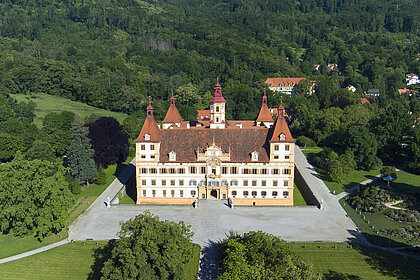
More than 85 animal species from all continents live in the Herberstein Animal World.
Universalmuseum
Joanneum
Back to Universalmuseum Joanneum

Mondomonger Deepfake Verified Apr 2026
They called it Mondomonger like a myth passed between strangers on late-night forums: a slick, chimeric persona stitched from public figures, influencers, and smugly familiar faces that never really existed. At first it was a curiosity — a short clip here, a comment thread there — the sort of thing that got shared with a half-laugh and a half-question: “Is this real?” Then small inconsistencies crept into conversations: a politician’s cadence borrowed by an influencer; a CEO’s expression edited onto a protestor’s body; an endorsement that never actually happened. The question hardened into obsession: what does it mean when a convincingly human presentation can be both everywhere and nowhere?
At the cultural level, Mondomonger reshaped trust heuristics. People learned to triangulate: cross-referencing clips with primary sources, seeking corroboration from established outlets, and valuing slow verification over viral certainty. Trust became more distributed and more active; consumers turned partially into investigators. That shift carried a cost — a creeping exhaustion and a slow erosion of casual confidence in media — but also a small civic awakening. Communities began developing local norms: verified channels trusted for specific claims; independent archives for public-interest footage; and shared repositories that catalogued known forgeries. mondomonger deepfake verified
The story of Mondomonger sits at the crossroads of three converging forces: technological virtuosity, social trust, and the economy of attention. Advances in generative models made it trivial to create faces, voices, and mannerisms so convincing that even close acquaintances hesitated. Tools that once required expert hardware and months of training were packaged into consumer-friendly interfaces. At the same time, platforms optimized for virality amplified the most emotionally potent artifacts — outrage, reassurance, fear — with scant regard for provenance. And somewhere inside this ecosystem, opportunists and artists alike began experimenting. Some sought profit through deception; others treated the medium as a new form of satire or commentary. Mondomonger blurred those motives into a seductive envelope. They called it Mondomonger like a myth passed
Mondomonger, then, becomes less a villain and more a catalyst. It revealed friction points in our information architecture and forced a reckoning over how we assign credibility. The era after Mondomonger is not a return to an imagined golden age of certainty; it is a new, more contested commons where verification is practiced as a craft, not a stamp — a continual, communal labor to keep what we accept as true in alignment with what we can demonstrate to be so. At the cultural level, Mondomonger reshaped trust heuristics
The lesson is not that technology is inherently corrupting, nor that verification is a panacea. It is that trust must be actively maintained. Verification must be procedural, plural, and visible; it must travel with the content and be resilient to tampering. Legal frameworks must deter harm while preserving creative and journalistic uses. And citizens must be equipped to handle a media ecology where the line between real and synthesized is often a gradient rather than a fence.
Ironically, Mondomonger also inspired creativity. Artists used the same technologies to imagine lost histories, to critique celebrity culture, and to probe the ethics of representation. Theater-makers layered synthetic performers with live actors to interrogate authenticity. Journalists used deepfake detection tools as a beat — the new verification journalism — exposing networks of coordinated deception and, in the process, teaching audiences how to be skeptical without becoming cynical.
There were consequences both subtle and seismic. In legal terms, impersonation and defamation frameworks strained to accommodate generative content. Regulators debated disclosure mandates: must creators flag synthetic media at the moment of upload, and what penalties should exist for bad-faith misuse? Platforms retooled policies, with uneven enforcement that tested global governance norms. Creators faced new questions of consent: should a voice or likeness of a deceased artist be allowed in new songs? Families and estates wrestled with the possibility of resurrecting, or weaponizing, the dead for revenue or propaganda.